Thursday, 31 October 2013
Top 10 Quotes By Dr. John C. Maxwell
John Maxwell Quotes #1
A leader is one who knows the way, goes the way, and shows the way.
John Maxwell Quotes #2
People buy into the leader before they buy into the vision.
John Maxwell Quotes #3
If we're growing, we're always going to be out of our comfort zone.
John Maxwell Quotes #4
Leaders must be close enough to relate to others, but far enough ahead to motivate them.
John Maxwell Quotes #5
Life is 10% of what happens to me and 90% of how I react to it.
John Maxwell Quotes #6
A man must be big enough to admit his mistakes, smart enough to profit from them, and strong enough to correct them.
John Maxwell Quotes #7
We choose what attitudes we have right now. And it's a continuing choice.
John Maxwell Quotes #8
The greatest day in your life and mine is when we take total responsibility for our attitudes. That's the day we truly grow up.
John Maxwell Quotes #9
Learn to say 'no' to the good so you can say 'yes' to the best.
John Maxwell Quotes #10
Once our minds are 'tattooed' with negative thinking, our chances for long-term success diminish.

Tuesday, 29 October 2013
To Achieve a healthy body.....
A
healthy body is very important for any individual. If you want to
achieve one, try reading this article. It provides three helpful tips
for a healthy body:
1. Exercise regularly - When you do regular exercises, it actually helps your body be in good shape. You can do different kinds of exercises a day. You can walk before or after work. You can also walk with your dog at the park.
If you are a family person, you can exercise by playing with your kids outside. Outdoor activities are great and helpful ways to have a healthy body.
You can play any sports or do yoga and meditation. This can relax your minds and bodies that will help you feel calmer and better. Exercises can actually burn your fats, thus building more muscles on your body. Because of that, it will make you achieve a healthy body.
2. Eat healthy foods -
It is also necessary that you eat healthy foods. Anybody, especially your health care practitioners will tell you that you have to provide your physical body quality and healthy foods to make your body function properly.
Eat healthy foods that are chemical-free and are rich in vitamin and minerals. You should eat foods that are very nutritious for you to achieve a healthy body. You can also take some herbal and vitamin supplements that will further help you in supporting you in your good and vital health.
3. Stop your vices - Vices are considered as major health distractions. In order to achieve a healthy body, stop your vices as early as possible. If you heavily smoke, learn to quit smoking, or if you are not a smoker, do not even dare to start it. Smoking can cause so many different kinds of disease complications in the body.
This is an unhealthy habit that people should avoid or quit it. Severe drinking of alcoholic beverages can also be one of the disruptive vices that can cause severe damage to your health. If you are a heavy drinker, learn to stop or minimize it. Do not over-pollute your body with so many unsafe and hazardous chemicals. Learn to stop your vices.
It is sometimes very difficult to achieve a healthy body, but it is not impossible. You can always follow these three helpful tips and live a healthier life every single day!
1. Exercise regularly - When you do regular exercises, it actually helps your body be in good shape. You can do different kinds of exercises a day. You can walk before or after work. You can also walk with your dog at the park.
If you are a family person, you can exercise by playing with your kids outside. Outdoor activities are great and helpful ways to have a healthy body.
You can play any sports or do yoga and meditation. This can relax your minds and bodies that will help you feel calmer and better. Exercises can actually burn your fats, thus building more muscles on your body. Because of that, it will make you achieve a healthy body.
2. Eat healthy foods -
It is also necessary that you eat healthy foods. Anybody, especially your health care practitioners will tell you that you have to provide your physical body quality and healthy foods to make your body function properly.
Eat healthy foods that are chemical-free and are rich in vitamin and minerals. You should eat foods that are very nutritious for you to achieve a healthy body. You can also take some herbal and vitamin supplements that will further help you in supporting you in your good and vital health.
3. Stop your vices - Vices are considered as major health distractions. In order to achieve a healthy body, stop your vices as early as possible. If you heavily smoke, learn to quit smoking, or if you are not a smoker, do not even dare to start it. Smoking can cause so many different kinds of disease complications in the body.
This is an unhealthy habit that people should avoid or quit it. Severe drinking of alcoholic beverages can also be one of the disruptive vices that can cause severe damage to your health. If you are a heavy drinker, learn to stop or minimize it. Do not over-pollute your body with so many unsafe and hazardous chemicals. Learn to stop your vices.
It is sometimes very difficult to achieve a healthy body, but it is not impossible. You can always follow these three helpful tips and live a healthier life every single day!
HEALTH BENEFITS OF CRANBERRY

#Protection against Urinary Tract Infection (UTI):
Long before researchers started investigating from the
standpoint of science, cranberry has been used to help prevent and treat
urinary tract infections (UTIs). While the acidity of cranberries was at one
time an important target of research, we now know that cranberry's ability to
provide UTI benefits is not primarily related to its acidity, but rather to its
proanthocyanidin (PAC) content. The PACs in cranberry have a special structure
(called A-type linkages) that makes it more difficult for certain types of
bacteria to latch on to our urinary tract linings. Include in these types of
bacteria are pathogenic (infection-causing) strains of E. coli—one of
the most common microorganisms involved in UTIs. By making it more difficult
for unwanted bacteria like E. coli to cling onto the urinary tract
linings, cranberry's PACs help prevent the expansion of bacterial populations
that can result in outright infection. The age group in which researchers are
least sure about this process involves children—it's just not clear when
cranberry's health benefits fully extend to this age group. The area where
benefits have been most pronounced are in middle-aged women who have
experienced recurrent UTIs. In some studies, UTIs in this age and gender group
have been reduced by more than one—third through dietary consumption of
cranberry.
#Anti-Inflammatory Benefits:
For the cardiovascular system and for many
parts of the digestive tract (including the mouth and gums, stomach, and colon)
cranberry has been shown to provide important anti-inflammatory benefits. It's
the phytonutrients in cranberry that are especially effective in lowering our
risk of unwanted inflammation, and virtually all of the phytonutrient
categories represented in cranberry are now known to play a role. These
phytonutrient categories include proanthocyanidins (PACs), anthocyanins (the
flavonoid pigments that give cranberries their amazing shades of red),
flavonols like quercetin, and phenolic acid (like hydroxycinnamic acids).
#Immune Support:
While research in this area is somewhat limited, recent studies on the immune support benefits of cranberry are exciting. In studies on very small numbers of human participants, intake of cranberry extracts has shown the ability to improve multiple aspects of immune function, and to lower the frequency of cold and flu symptoms in the subjects. In several of these studies, the cranberry extracts were standardized to contain a known, higher-end amount of proanthocyanidins (PACs)—somewhat comparable to a double-strength cranberry juice. From our perspective, the doses of cranberry extract used in these studies match up fairly well with generous intake of whole, raw cranberries, and we look forward to future studies focused on precisely that: intake of whole, raw cranberries and resulting changes in cold and flu symptoms.
#Anti-Cancer Benefits:
No area of cranberry research has been more intriguing in the past 10 years than research on cranberry and cancer, even though the majority of studies in this area have involved lab studies on human cancer cells or animal experiments. On a virtual year-by-year basis, scientists continue to identify new mechanisms that establish cranberries as anti-cancer agents. These mechanisms are now known to include: blocked expression of MMPs (matrix metalloproteinases); inhibition of ODC (ornithine decarboxylase enzymes); stimulation of QRs (quinone reductase enzymes); inhibition of CYP2C9s (Phase I detoxification enzymes); and triggering of apoptosis (programmed cell death) in tumor cells. It's important to point out that this amazing list of anti-cancer properties in cranberry is not sufficient to establish cranberry as a food to be used in the treatment of cancer. However, it is a list that appears consistent with other studies of cranberry and cancer showing dietary intake of this food to help prevent cancer occurrence. These cancer-preventive benefits of cranberry are especially likely in the case of breast, colon, lung, and prostate cancer.
#Digestive Tract Benefits:
When you add up the health-related benefits of cranberry for our mouth and gums (decreased risk of periodontal disease), stomach (decreased risk of stomach ulcer), and colon (decreased risk of colon cancer), it's impossible not to conclude that cranberry is unique among fruits in its ability to provide us with digestive tract benefits. Every category of phytonutrient known to be provided by cranberry is also known to play a role in digestive tract support. In the case of cranberry's proanthocyanidins, it's decreased adherence of the bacterium Helicobacter pylori to our stomach wall that's made possible by intake of cranberry. In the case of cranberry's flavonoids, anthocyanins and triterpenoids, provide antioxidant and anti-inflammatory benefits that decrease our risk of colon cancer, and also our risk of periodontal disease.
Monday, 28 October 2013
Artemether + Lumefantrine
Malaria kills twice as many people every year
as formerly believed, taking 1.2 million lives and causing the deaths
not only of babies but also older children and adults, according to
research that overturns decades of assumptions about one of the world's most lethal diseases.
Malaria is caused by parasites that are spread by mosquitoes, and even in relatively mild cases it can cause high fever, chills, flu-like symptoms, and anemia, which can be especially dangerous for pregnant women. Children who survive severe malaria can suffer lifelong mental disabilities. Malaria’s economic impact is estimated to cost billions of dollars in lost productivity every year.
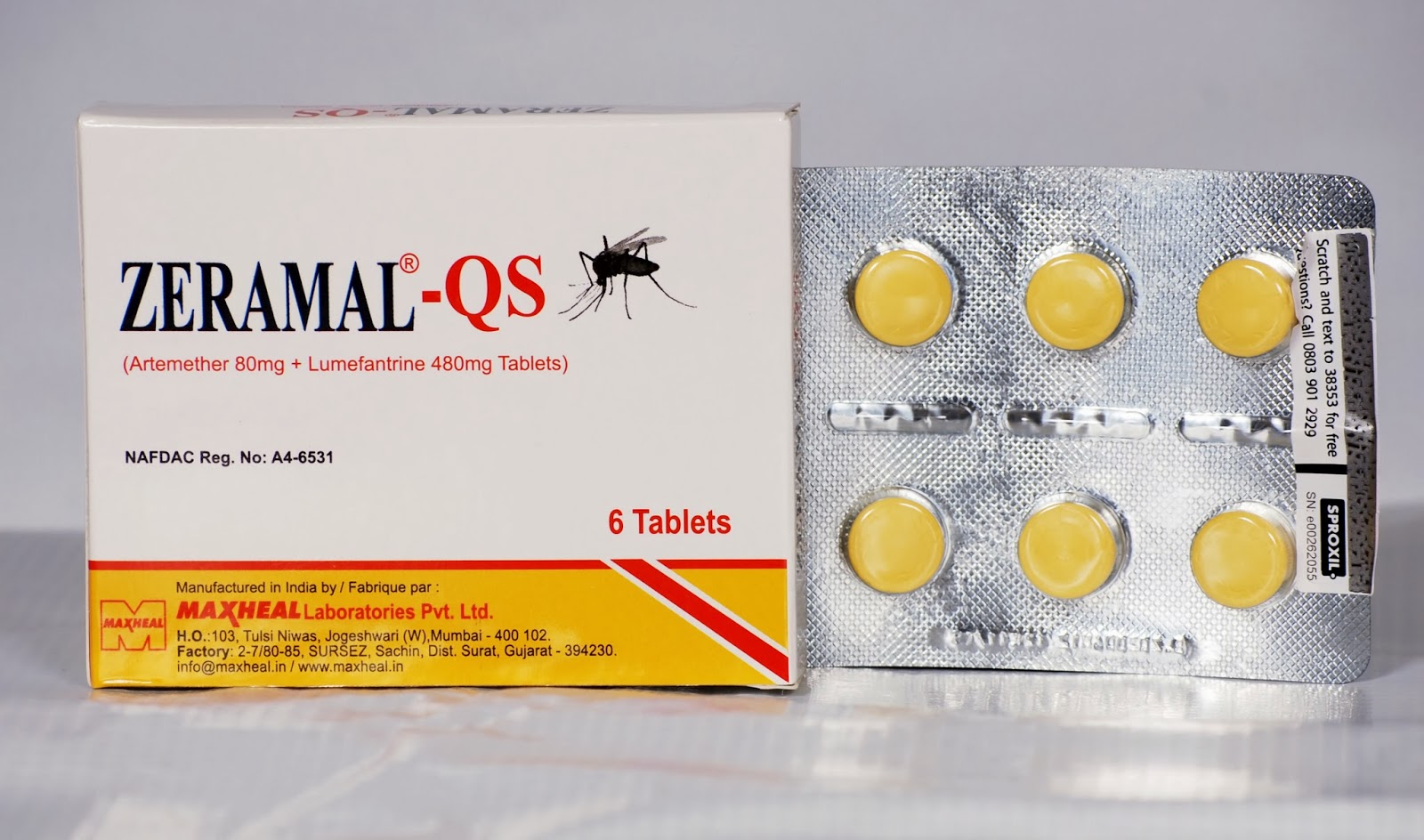
Malaria is curable and ZERAMAL QS is the solution.
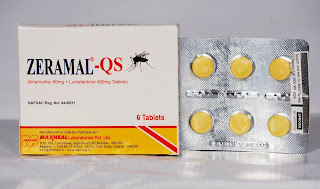
Malaria is caused by parasites that are spread by mosquitoes, and even in relatively mild cases it can cause high fever, chills, flu-like symptoms, and anemia, which can be especially dangerous for pregnant women. Children who survive severe malaria can suffer lifelong mental disabilities. Malaria’s economic impact is estimated to cost billions of dollars in lost productivity every year.
Malaria is curable and ZERAMAL QS is the solution.
Zeramal QS is a fixed-dose
combination tablet of artemether and lumefantrine. Artemether is a methyl ether
derivative of dihydroartemisinin derived from artemisinin.
Lumefantrine is a racemic2, 4, 7, 9-substituted fluorine derivative that conforms structurally, physicochemically and in mode of action to the arylamino alcohol group of antimalarials that includes quinine and mefloquine.
Lumefantrine is a racemic2, 4, 7, 9-substituted fluorine derivative that conforms structurally, physicochemically and in mode of action to the arylamino alcohol group of antimalarials that includes quinine and mefloquine.



— CREATIVITY, IMAGINATION, PROBLEM-SOLVING —
"Nobody is bored when he is trying to make something that is beautiful, or to discover something that is true." — William Inge
"Imagination is more important than knowledge." — Albert Einstein, 20th-century Swiss mathematician, physicist and public philosopher
"Analysis kills spontaneity. The grain once ground into flour germinates no more." — Henri Amiel
"It is with the heart that one sees rightly; what is essential is invisible to the eye." — Antoine de Saint-Exupery, The Little Prince
"You can never solve a problem on the level on which it was created." — Albert Einstein, 20th-century Swiss mathematician, physicist and public philosopher
"No problem can stand the assault of sustained thinking." — Francois Marie Arouet de Voltaire, 18th-century French author, wit and philosopher
"Discovery is the ability to be puzzled by simple things." — Noam Chomsky, 20th-century American linguist and political activist
"To swear off making mistakes is very easy. All you have to do is swear off having ideas." — Leo Burnett, 20th-century American advertising pioneer
“Imagination was given to us to compensate for what we are not; a sense of humor was given to us to console us for what we are.” — Mack McGinnis
"The greatest and most important problems in life are all in a certain sense insoluble. They can never be solved, but only outgrown." — Carl Jung, 20th-century Swiss founder of analytical psychology
LAXTAB
Furosemide or frusemide is a loop diuretic used in the treatment of congestive heart failure and oedema.
Oedema, also known as dropsy, is the medical term for fluid retention in the body.
The build-up of fluid causes affected tissue to become swollen. The swelling can occur in one particular part of the body – for example, as the result of an injury – or it can be more general.
This is usually the case with oedema that occurs as a result of certain health conditions, such as heart failure or kidney failure.
As well as swelling or puffiness of the skin, oedema can also cause:
• skin discolouration
• areas of skin that temporarily hold the imprint of your finger when pressed (known as pitting oedema)
• aching, tender limbs
• stiff joints
• weight gain or weight loss
• raised blood pressure and pulse rate
Types of oedema
Oedema can occur anywhere in the body but it's most common in the feet and ankles, where it is known as peripheral oedema.
Other types of oedema include:
• cerebral oedema (affecting the brain)
• pulmonary oedema (affecting the lungs)
• macular oedema (affecting the eyes)
Idiopathic oedema is a term used to describe cases where doctors are unable to find a cause.
What causes oedema?
Oedema is often a symptom of an underlying health condition. It can occur as a result of the following conditions or treatments:
• pregnancy
• kidney disease
• heart failure
• chronic lung disease
• thyroid disease
• liver disease
• malnutrition
• medication, such as corticosteroids or medicine for high blood pressure (hypertension)
• the contraceptive pill
Oedema that occurs in the leg may be caused by:
• a blood clot
• varicose veins
• a growth or cyst
Oedema can also sometimes occur as a result of:
• being immobile for long periods
• hot weather
• exposure to high altitudes
• burns to the skin
Lymphoedema
Lymphoedema is a common cause of fluid build-up in the body's tissues. It occurs when the lymphatic system is damaged or disrupted.
The lymphatic system is a series of glands (lymph nodes) around the body connected by a network of vessels similar to blood vessels. Fluid surrounding body tissues usually drains into nearby lymph vessels so it can be transported away and back into the blood.
However, if the lymphatic vessels are blocked, excess fluid cannot be re-absorbed and will build up in tissue.
Treating oedema
Oedema usually clears up when the underlying condition causing the fluid imbalance is diagnosed and treated.
Self-help
Your GP may recommend some things you can do yourself to reduce fluid retention, including:
• losing weight (if you are overweight)
• taking regular exercise, such as walking, swimming and cycling
• raising your legs three-to-four times a day to improve your circulation
• avoiding standing for long periods of time
Diuretics
Diuretics are a type of medication that may also be prescribed to help reduce fluid build-up.
Eg. Laxtab (Furosemide): Marketed by Kuka Pharmaceuticals Nig. Ltd.
They work by increasing the amount of urine you produce.

Oedema, also known as dropsy, is the medical term for fluid retention in the body.
The build-up of fluid causes affected tissue to become swollen. The swelling can occur in one particular part of the body – for example, as the result of an injury – or it can be more general.
This is usually the case with oedema that occurs as a result of certain health conditions, such as heart failure or kidney failure.
As well as swelling or puffiness of the skin, oedema can also cause:
• skin discolouration
• areas of skin that temporarily hold the imprint of your finger when pressed (known as pitting oedema)
• aching, tender limbs
• stiff joints
• weight gain or weight loss
• raised blood pressure and pulse rate
Types of oedema
Oedema can occur anywhere in the body but it's most common in the feet and ankles, where it is known as peripheral oedema.
Other types of oedema include:
• cerebral oedema (affecting the brain)
• pulmonary oedema (affecting the lungs)
• macular oedema (affecting the eyes)
Idiopathic oedema is a term used to describe cases where doctors are unable to find a cause.
What causes oedema?
Oedema is often a symptom of an underlying health condition. It can occur as a result of the following conditions or treatments:
• pregnancy
• kidney disease
• heart failure
• chronic lung disease
• thyroid disease
• liver disease
• malnutrition
• medication, such as corticosteroids or medicine for high blood pressure (hypertension)
• the contraceptive pill
Oedema that occurs in the leg may be caused by:
• a blood clot
• varicose veins
• a growth or cyst
Oedema can also sometimes occur as a result of:
• being immobile for long periods
• hot weather
• exposure to high altitudes
• burns to the skin
Lymphoedema
Lymphoedema is a common cause of fluid build-up in the body's tissues. It occurs when the lymphatic system is damaged or disrupted.
The lymphatic system is a series of glands (lymph nodes) around the body connected by a network of vessels similar to blood vessels. Fluid surrounding body tissues usually drains into nearby lymph vessels so it can be transported away and back into the blood.
However, if the lymphatic vessels are blocked, excess fluid cannot be re-absorbed and will build up in tissue.
Treating oedema
Oedema usually clears up when the underlying condition causing the fluid imbalance is diagnosed and treated.
Self-help
Your GP may recommend some things you can do yourself to reduce fluid retention, including:
• losing weight (if you are overweight)
• taking regular exercise, such as walking, swimming and cycling
• raising your legs three-to-four times a day to improve your circulation
• avoiding standing for long periods of time
Diuretics
Diuretics are a type of medication that may also be prescribed to help reduce fluid build-up.
Eg. Laxtab (Furosemide): Marketed by Kuka Pharmaceuticals Nig. Ltd.
They work by increasing the amount of urine you produce.

Subscribe to:
Posts (Atom)